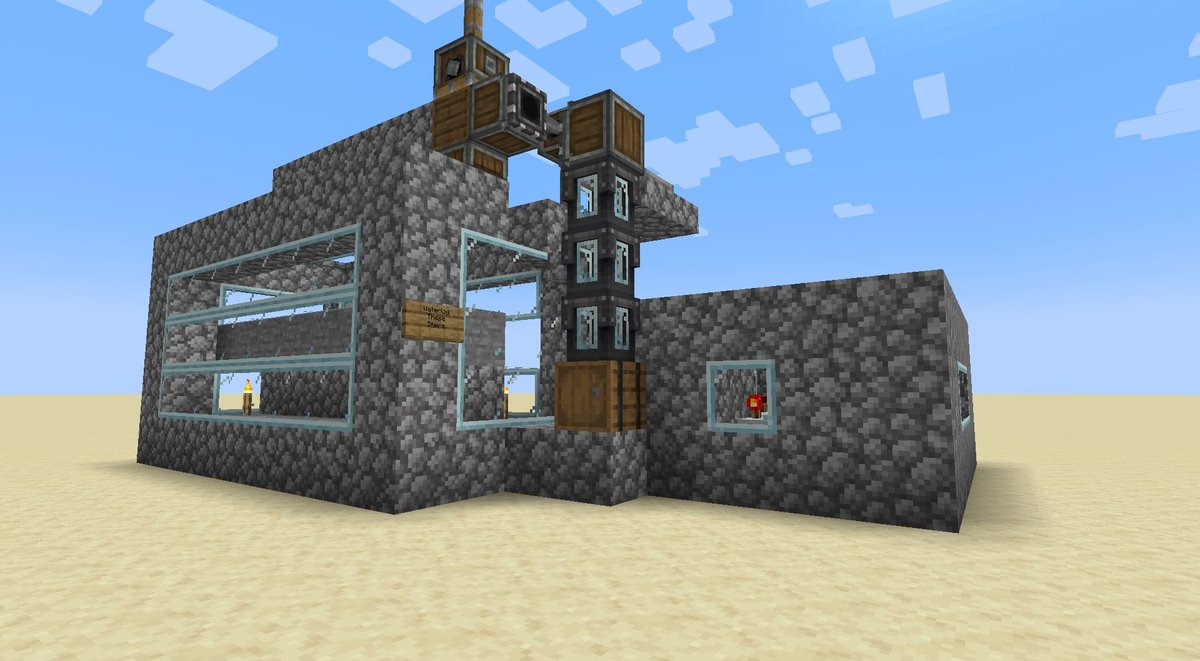
Running out of cobblestone in Minecraft can halt even the most ambitious building projects. Whether you're constructing a grand castle, expanding your survival base, or just need more material for furnaces and tools, the demand for this foundational block is constant. The good news? You don't have to endlessly strip-mine the landscape. You can build a basic cobblestone generator, a marvel of in-game engineering that provides an infinite, renewable supply of this essential resource.
This guide will walk you through several Basic Cobblestone Generator Designs, from the incredibly simple to the ingeniously automated, empowering you to create a steady flow of cobblestone (or even stone!) for all your Minecraft endeavors. No more pickaxe exhaustion from digging up mountains – it’s time to put lava and water to work.
At a Glance: Key Takeaways
- Cobblestone generators harness the interaction between flowing lava and flowing water to create new blocks.
- The simplest designs require just a lava bucket and a water bucket, perfect for early game or limited resources like Skyblock.
- More advanced generators can integrate collection systems, push blocks with pistons, or even fully automate the mining process with TNT.
- Careful placement of water and lava dictates whether you generate cobblestone, stone, or obsidian.
- Using a Silk Touch pickaxe on generated cobblestone yields stone blocks instead.
- Consider your available resources, desired efficiency, and automation goals when choosing a design.
The Magic Behind the Blocks: How Cobblestone Generators Work
At its core, a cobblestone generator relies on a fundamental Minecraft mechanic: the interaction of lava and water. When these two liquids meet in specific ways, they solidify into different blocks:
- Flowing lava touching still water: This creates stone.
- Flowing water over still lava: This results in obsidian.
- Flowing lava meeting flowing water: This is the sweet spot for cobblestone!
The trick is to create a controlled environment where flowing lava and flowing water continuously interact at a specific point, creating a block that can be mined, only for another to immediately generate in its place. This endless cycle provides the "infinite" supply.
It's also worth noting that while these generators produce cobblestone by default when mined with a regular pickaxe, using a pickaxe enchanted with Silk Touch will allow you to harvest stone blocks directly. This opens up more building possibilities without needing a separate smelting process.
Now, let's dig into the designs themselves. From your very first days in a new world to sprawling, complex contraptions, there’s a generator for every stage of your Minecraft journey.
Method 1: The Easiest Cobblestone Generator (Your First Step to Infinite Cobblestone)
This is the quintessential basic cobblestone generator, ideal for players with minimal resources or those starting on challenging maps like Skyblock, where every block counts. It's low-resource, quick to build, and gets the job done, albeit with lower efficiency than more advanced designs.
Why Build This One?
You have very few resources, need cobblestone now, and don't care about a collection system. It's the perfect starter.
What You'll Need:
- 1 Water Bucket (or 1 Ice Block)
- 1 Lava Bucket
Building It, Step-by-Step:
- Dig the Trench: Start by digging a 4-block long, 1-block wide, and 1-block deep hole in the ground. Think of it as a small ditch.
[ ] [ ] [ ] [ ](Top-down view of blocks in the ground) - Create the Interaction Point: Break the second block in the hole from one end. This creates a deeper section.
[ ] [X] [ ] [ ](Where X is the broken block, now 2 blocks deep) - Place the Water: Go to the end of the trench closer to the deeper hole. Place your water bucket (or place and then break an ice block) in this end. The water will flow towards the deeper section.
[W] [X] [ ] [ ](W is water source) - Place the Lava: Now, go to the other end of the trench. Place your lava bucket on the block that is two blocks away from the deeper hole.
[W] [X] [L] [ ](L is lava source)
The lava will flow towards the water. The magic happens when the flowing lava meets the flowing water in that deeper "X" block. - Start Mining! You'll see a cobblestone block immediately generate in the middle. Mine it, and another will instantly appear. Repeat for an endless supply!
This simple design is proof that you don't need complex redstone to get started with basic resource generation.
Method 2: The Most Popular Cobblestone Generator Design (With Collection!)
This generator steps things up a notch by making the process more efficient and, crucially, including an automatic collection system. This means less bending over to pick up items and more time for building! It's also often designed as a stone generator, easily switchable to cobblestone.
Why Build This One?
You want more efficiency, hate picking up dropped items, and might prefer stone over cobblestone for building.
What You'll Need:
- 2 Water Buckets
- 1 Lava Bucket
- 5 Stairs (any inflammable type, e.g., stone brick, cobblestone)
- Solid Blocks (any inflammable type, e.g., stone, cobblestone, dirt)
- 5 Hoppers
- 2 Chests (to form a double chest)
- 1 Sign (any type)
Building It, Step-by-Step:
- Set Up Storage: Start by digging a 1x2 hole in the ground and placing your two chests side-by-side to form a double chest. This will be your primary storage.
- Connect the Hoppers: Place five hoppers leading into the chest. The first hopper should face into the top of the double chest. The subsequent four hoppers should form a line away from the chest, with each hopper facing into the one before it. This creates a collection line.
(H) -> (H) -> (H) -> (H) -> (H) -> [Double Chest] - Frame the Collection System: Surround the hoppers and the chest with solid blocks. This creates a solid base and walls for your generator. Build up the walls one block high around the hoppers.
- Place the Water Containment (Stairs): On top of the solid blocks directly above the hoppers, place your five stairs. They should form a line. The crucial part here is that stairs can hold water.
- Build the Next Layer of Walls: Place solid blocks on top of the bottom solid blocks, creating a second layer of walls around your stairs and the hopper mechanism.
- Add the Sign: Place a sign on one of the solid blocks at head level, directly above the chest. This sign will help contain the water later.
- Waterlog the Stairs: Now, carefully waterlog each of the five stairs. This means right-clicking each stair with a water bucket. The water will fill the stairs and flow, but the sign and surrounding blocks will prevent it from spilling out. The water will flow along the top of the stairs towards the chest end.
- Build the Lava Platform: Place more solid blocks above the stairs, the existing walls, and the sign to create a third layer. This forms a platform above the flowing water.
- Place the Lava: Place your lava bucket one block directly above where the flowing water is in the center of your stair setup.
The lava will flow downwards, meet the water, and continuously generate blocks. - Mine Away: Mine the continually generated blocks. The items will drop into the flowing water, which will push them into the hoppers, and then into your double chest.
- To get stone: Use a Silk Touch pickaxe.
- To get cobblestone: Use a regular pickaxe. A Fortune-enchanted pickaxe will give you more cobblestone per block!
This design is a fantastic upgrade for mid-game survival, providing hands-free collection and significantly boosting your efficiency. If you're looking for even more ways to automate your resource gathering, understanding how to build cobblestone generators is just the beginning.
Method 3: Piston-Based Cobblestone Generator (Pushing Forward)
For those who want a more reliable and hands-on but still largely automated approach, a piston-based generator is an excellent choice. This design uses pistons to push generated cobblestone blocks towards you, creating a compact mining area. While it can be slower than fully automated TNT designs, it's incredibly robust and less prone to breaking.
Why Build This One?
You want a robust, semi-automated system that pushes blocks for you, creating a more concentrated mining area. You're comfortable with basic Redstone.
What You'll Need:
- 2 Water Buckets
- 1 Lava Bucket
- 8 Pistons
- 2 Redstone Torches
- 1 Redstone Repeater
- 11 Redstone Dust
- 5 Stairs (inflammable)
- Solid Blocks (inflammable)
- 1 Lever
Building It (for one module):
This setup can be extended for more pistons, but we'll focus on a single module for clarity.
- Base and Water Containment:
- Place five stairs in a line.
- Surround these stairs with solid blocks to create a perimeter.
- Waterlog the stairs to contain the water source.
- Place solid blocks on top of the stairs and on the edges of your perimeter blocks. This creates the 'floor' for the lava.
- Extend two blocks on either end, away from the stairs.
- Connect these two ends with more solid blocks to create a closed ring or channel for the lava. This structure forms the core of your generator, where water flows from below and lava will flow from above.
- First Piston (The Trigger):
- From one of the stairs, on one side, break a block diagonally downwards.
- In this new hole, place a redstone torch.
- Place a piston diagonally upwards from where the redstone torch is, so the piston is facing towards where the cobblestone will generate.
- Attach a solid block to the side of this piston and place one piece of redstone dust next to it.
- The Piston Line (The Pushers):
- On the opposite side of your first piston, place 8 pistons in a straight line, facing towards the generator's center (where cobblestone will appear).
- Place solid blocks directly behind these 8 pistons.
- Place redstone dust on top of all these solid blocks behind the pistons. This will power them.
- Redstone Circuitry:
- From the last piston in the line, break a block diagonally downwards.
- Place a redstone torch in this hole.
- From this redstone torch, place two pieces of redstone dust.
- Next to the redstone dust, place one redstone repeater, ensuring it faces towards the main line of redstone dust behind your 8 pistons. Set it to its default (1-tick) delay for now.
- Place two more pieces of redstone dust, connecting the repeater to the redstone dust line behind the pistons. This completes the circuit that powers all 8 pistons sequentially.
- Lava Placement:
- Place lava one block directly above your first piston, and ensure it flows into the center of the ring you created in step 1. The lava will meet the water, generating cobblestone.
- Control Lever:
- Place a lever on the solid block that is attached to your first piston.
How It Works:
When the generator is active, lava and water create cobblestone. The first piston pushes the block into the main piston line. The redstone circuit then powers the line of 8 pistons, pushing the generated blocks across the platform towards you, allowing you to easily mine them from a single spot. Activating the lever will power the first piston, stopping it from pushing the initial block, which effectively halts the machine. This is useful for temporary pauses or maintenance.
Method 4: Fully Automated Cobblestone Generator (The Industrial Solution)
This is the big leagues. A fully automated cobblestone generator takes resource production to an entirely new level, combining piston-driven generation with a TNT duper to break blocks automatically, all collected by an extensive hopper system. This is a fast, highly efficient, but also very resource-intensive design, often favored by players in late-game survival or on large multiplayer servers.
Why Build This One?
You need an extreme amount of cobblestone, want hands-off automation, and have advanced resources (Redstone, Slime Blocks, Obsidian, etc.) at your disposal.
What You'll Need:
This is a hefty list, as expected for a fully automated machine!
- Fluids: Water Buckets (several), Lava Buckets (several)
- Blocks: ~40 Leaves (any type, inflammable), ~1.5 stacks Obsidian, Solid Blocks (any inflammable type), 2 Slabs (any type)
- Pistons: 7 Sticky Pistons, 5 Regular Pistons
- Redstone Components: 5 Target Blocks, 2 Observers, 1 Block of Redstone, 2 Redstone Comparators, 3 Redstone Repeaters, ~20 Redstone Dust (estimate, more might be needed for wiring)
- Slime & Mobility: 6 Slime Blocks, 1 TNT, 1 Fence (any type), 1 Dead Coral Fan (for the duper), 1 Detector Rail, 1 Minecart
- Containment & Control: 3 Fence Gates, 2 Levers
- Collection: Chests (as many as you need!), at least 3 Hoppers, 1 Stair (any inflammable type)
Building It: The Generator Part
This section builds the core cobblestone production and pushing mechanism.
- Piston Line: Place 5 regular pistons facing towards where your collection area will be. These will push the generated cobblestone.
- Water Source: Place 5 leaves on top of these pistons. Waterlog each leaf block. These leaves will act as non-solid blocks that hold the water source directly above the pistons.
- Lava Frame:
- Place solid inflammable blocks on top of the leaves, extending the line by one block on either end. This creates a 1x7 platform.
- Build a 1-block wide ring of solid blocks around this platform, forming an enclosure (except for the side where the pistons push out). This creates the channel where the lava will flow.
- Generation Trigger (Observer):
- On one end of the lava ring, place an observer one block below and in the center of the ring, looking towards the leaves. Its job is to detect when a cobblestone block forms.
- Put a solid block directly behind this observer.
- Sticky Piston Line (The Pullers):
- Diagonally downwards from the regular pistons (the ones pushing forward), place 5 sticky pistons, facing up. These will pull the generated block downwards when the regular pistons retract.
- Redstone for Sticky Pistons:
- Adjacent to the sticky pistons, dig a 5-block long, 1-block wide hole. Place 5 target blocks in this hole. Target blocks are useful as they power Redstone dust in all directions when powered.
- Next to the target blocks, dig a 6-block long, 1-block wide hole (starting from the edge opposite the observer). Place redstone dust along this entire hole.
- Under the solid block the first observer is attached to, place redstone dust and connect it with the redstone dust next to the target blocks. This ensures the observer's signal triggers the sticky pistons.
- Redstone for Regular Pistons:
- Place solid blocks attached to the side of the regular pistons at the back of the generator.
- Place redstone dust on these blocks and extend it with two more redstone dust towards the other redstone line (the one with the target blocks).
- Connect these two redstone lines with a repeater facing towards the line behind the regular pistons. Set this repeater to two ticks (right-click once). This delays the pushing pistons slightly, allowing the pulling sticky pistons to act first.
- Enable/Disable Switch: Place a lever attached to the redstone line before the repeater. This lever will disable/enable the sticky pistons, effectively pausing the generator.
- Lava Influx: Add lava to the ring you created. The lava will flow and meet the waterlogged leaves, continuously generating blocks.
Building It: The TNT Duper Part
This ingenious contraption creates an infinite supply of TNT to break the generated blocks.
- TNT Blast Chamber:
- Place an obsidian block exactly 12 blocks away from the center of the regular pistons, and a couple of blocks down. This will be the blast point for your TNT.
- Dig a large hole around this obsidian block. Fill the bottom of this hole with water to collect the items after the explosion.
- Duper Base:
- Pillar up 15 blocks from the obsidian block. This will be the height of your TNT duper.
- Diagonally upwards from the top of this 15-block pillar, place a slime block. Attach two more slime blocks to it, forming an L shape.
- Core Components:
- Attach a fence (any type) to the topmost slime block of your L-shape.
- Adjacent to this fence, place three more slime blocks, forming another L shape (mirroring the first).
- Place a detector rail on the slime block directly attached to the fence. Place a minecart on top of the detector rail.
- Add a TNT block directly under the fence.
- Place a dead coral fan attached to the slime block next to the TNT. This helps stabilize the TNT duper.
- Activating Piston: Attach a sticky piston facing towards the rest of the TNT duper, attached to the slime block next to the detector rail. This piston will push the TNT duper to activate it.
- Water Curtain (for Item Collection):
- Create a 5x5 vertical platform of leaves. The top center block of this platform should be attached to the slime block one block below the one attached to the sticky piston from step 4. This platform will help guide water.
- Make a 2-block long, 5-block wide platform attached to the bottom center block of your leaf platform.
- Add two more leaf blocks on either side of this 2x5 platform to form a "leaf armchair" shape. This entire leaf structure acts as a water guide.
- Place three fence gates diagonally upwards from the edge of the leaf blocks (not attached to the leaves directly). These will hold water.
- Crucial Water Placement: Temporarily remove those three leaf blocks that form the "armchair," place solid blocks in their place, place water in the corner of the "leaf armchair" (where the leaves would be), then replace the solid blocks with leaves. This creates a contained water flow within the leaf structure.
- Attach a solid block to the center fence gate. This block will stop the TNT's momentum, ensuring it explodes in the correct spot.
Building It: Etho Hopper Clock for TNT Duper
This Redstone clock controls the timing of the TNT duper.
- Piston & Observer Setup:
- Place three solid blocks in a row, attached to the TNT duper's sticky piston.
- Break the two closest to the sticky piston.
- Place an observer facing into the third solid block.
- Remove the solid block the observer is attached to (it was just a temporary placement guide).
- Hopper & Comparator Setup:
- Diagonally downwards from the observer, place two permanent solid blocks in a row.
- Adjacent to the last block, place two hoppers connected to each other (one hopper should face into the other).
- Place two solid blocks diagonally downwards from one of these hoppers.
- Place a redstone comparator on the block closer to the hopper (it reads the hopper's contents).
- Place a redstone repeater on the other block (further from the hopper).
- Redstone & Sticky Piston:
- Place a solid block attached to the repeater with redstone dust on top.
- Attached to that redstone dust, place a top-half slab. Add redstone dust to the slab.
- Attach a sticky piston to the slab, facing the hoppers. This piston will push the Redstone block.
- Mirror the Setup: Repeat the entire setup from step 2 and 3 on the other side of the hoppers.
- Clock Activation: Place a redstone block on one of the hoppers. This is what makes the clock tick.
- Timing Items: Fill the other hopper with exactly 4 items (any non-stackable or stackable item will work). This number provides quick switching, perfect for precise TNT priming.
- Connecting to Duper: Add two pieces of redstone dust between the observer (from step 1) and the hopper clock. This ensures the duper triggers correctly.
- Duper Disable: To disable the hopper clock and TNT duper, power the redstone dust that the observer is facing towards (e.g., with a lever or a master switch in your Redstone network).
- Final Block: Place the final solid block between the observer and the sticky piston that is part of the duper, completing the circuit.
Building It: The Collection System
This ensures all those shattered cobblestone blocks make it into your inventory.
- Blast Proof Platform: Underneath your obsidian blast block, create an 11x11 block platform. Surround this entire platform with a two-block tall obsidian wall to contain explosions and guide items.
- Water Flow Path:
- Along the bottom of your main 11x11 platform, on the side closest to your generator, create a two-block wide, 11-block long platform.
- Place water sources along the inside of the obsidian wall. The water will flow towards the center.
- Dig a one-block deep hole along the edge of your 11x11 platform, just before the water stops flowing. This creates a channel.
- Place a water source at the end of this channel (the end opposite where you want your chests). The water will flow along this channel.
- When this water flow stops, start another one-block deep hole one block before the water stops to extend the flow further. Repeat this until the water flows to your desired collection point.
- Hopper-Chest Array:
- At the very end of your final water channel, place a hopper facing into a chest.
- Place a stair block directly above the chest. This allows you to open the chest while preventing items from flowing past the hopper.
- For extensive storage, chain multiple hoppers into more chests, creating a vast item collection system.
Operation Caveat:
This fully automated generator is incredibly fast, but it does have a critical caveat: if the regular pistons reach their full push limit (12 blocks) and are still being supplied with cobblestone, the generated blocks will eventually push the lava source block, causing it to be deleted. This halts your generator. To prevent this, always include a way to deactivate the generator (the lever on the sticky pistons is a good start) and check on it periodically. If the lava is deleted, simply replace it.
Troubleshooting & Maintenance Tips for Your Cobblestone Generators
Even the most well-designed generators can sometimes act up. Here are some common issues and how to resolve them:
- No Cobblestone Generating:
- Check Lava/Water Flow: Ensure both liquids are flowing when they meet. If one is still (a source block), you might get stone or obsidian.
- Source Block Placement: Double-check that your lava and water source blocks are in the exact positions specified by the design. Even a single block off can break the reaction.
- Obstructions: Is there anything blocking the flow of lava or water? A stray block or item could interrupt the process.
- Items Not Collecting (Method 2 & 4):
- Hopper Direction: Make sure all hoppers are facing into the next hopper or into the chest. A misaligned hopper will stop the chain.
- Water Flow: Is the water flowing correctly to push items towards the hoppers? Ensure there are no gaps or blocks preventing item movement.
- Chest Full: If your chests are full, items will start backing up in the hoppers. Expand your storage!
- Pistons Not Pushing (Method 3 & 4):
- Redstone Power: Is your Redstone circuit fully powered? Check for disconnected dust, unpowered repeaters, or a lever in the "off" position.
- Piston Limit: Pistons can only push a certain number of blocks (12 for regular, fewer for sticky pistons with complex blocks). If the line of generated blocks is too long, the pistons will stop. This is why automated systems need TNT to clear blocks.
- TNT Duper Issues (Method 4):
- Component Placement: The TNT duper is precise. Every slime block, fence, coral fan, and piston must be in the exact spot. Even a slight offset can cause it to fail.
- Lag: In multiplayer or laggy worlds, complex Redstone like TNT dupers can sometimes desync or break. Be prepared for occasional repairs.
- Lava Deletion: As mentioned, if the blocks aren't cleared quickly enough, the lava source can be deleted. Keep an eye on it.
- Obsidian Generation: If you're getting obsidian instead of cobblestone, it means flowing water is hitting still lava. Adjust your lava placement so it flows into the water.
- Stone Generation: If you're getting stone, it means flowing lava is hitting still water. Adjust your water placement so it flows into the lava, or ensure both are flowing.
Choosing the Right Cobblestone Generator for Your World
With several designs available, how do you pick the best one? Consider these factors:
- Stage of Game & Resources:
- Early Game/Skyblock: Method 1 (Easiest) is your go-to. It requires minimal resources and gets you building immediately.
- Mid-Game/Established Survival: Method 2 (Most Popular) offers a great balance of efficiency and collection, making it perfect for sustained growth without overwhelming resource costs.
- Late Game/Industrial Scale: Method 3 (Piston-Based) provides a reliable, semi-automated option for focused mining, while Method 4 (Fully Automated) is for players with abundant resources who need a truly hands-off, high-volume solution.
- Automation Level:
- Manual Mining: Method 1.
- Automatic Collection, Manual Mining: Method 2.
- Automatic Pushing, Manual Mining: Method 3.
- Fully Automatic (Mining & Collection): Method 4.
- Efficiency & Output:
- Method 1 is slowest and least efficient.
- Method 2 is good for steady output with easy collection.
- Method 3 provides a concentrated mining point but is limited by piston speed.
- Method 4 is by far the fastest and highest output, suitable for mega-projects.
- Complexity & Redstone Skill:
- Method 1 requires no Redstone.
- Method 2 requires no Redstone.
- Method 3 introduces basic Redstone (torches, repeaters, dust).
- Method 4 involves complex Redstone (observers, comparators, hopper clocks, sticky pistons) and requires a solid understanding of mechanics.
Ultimately, the "best" design is the one that fits your current needs and playstyle. Don't be afraid to start simple and upgrade as your world and resources grow!
Your Endless Supply Awaits!
From the humble beginnings of your first dirt house to the grandest Redstone contraptions, cobblestone remains a bedrock resource in Minecraft. By mastering these basic cobblestone generator designs, you're not just automating a task; you're unlocking boundless creativity. Say goodbye to the grind and hello to limitless building possibilities. So grab your pickaxe, gather your buckets, and start crafting your very own source of infinite stone!